
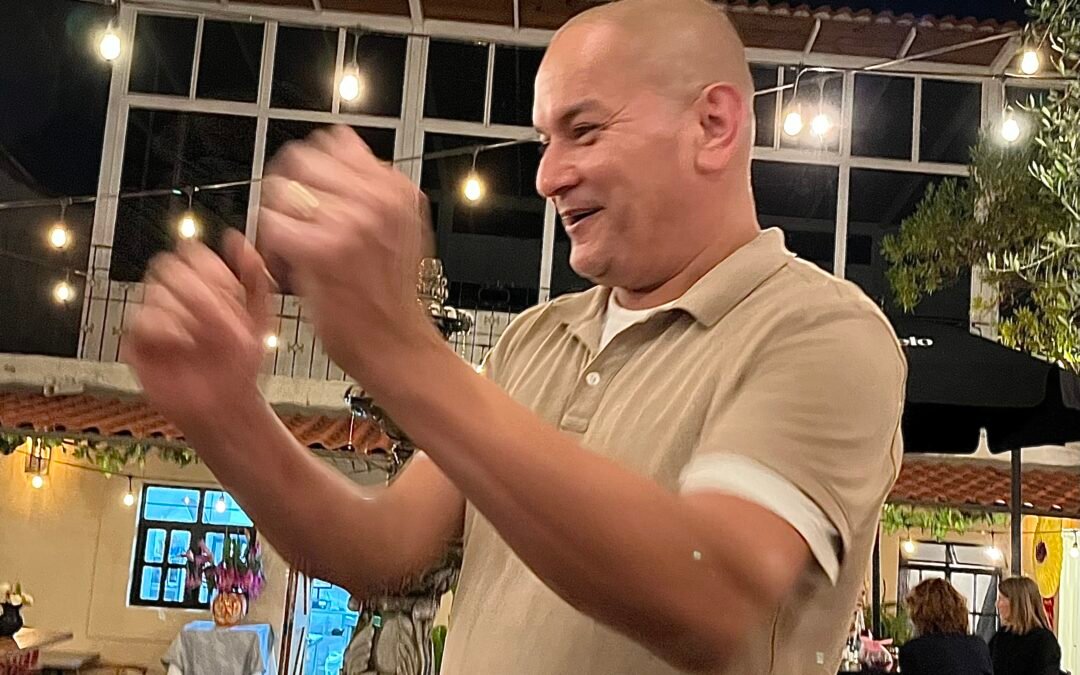
It was about 25 years ago. I had bought Rick Bayless’ bible, Authentic Mexican, and it inspired me to start a mission. I wanted to experience every single mole he mentioned in the book.
I found a rainbow of color-inspired choices: negro, colorado, amarillo, verde, chichilo, naranja, coloradito, There were moles from Puebla, Oaxaca, San Pedro Otacpan, even San Miguel’s neighboring towns of Queretaro and Guanajuato. There was Mexico’s national dish, Mole Poblano, that you could find in any of ten different San Miguel restaurants. But there was one mole that was a real needle in the haystack.
I loved the name of it: Manchamanteles. In English, tablecloth stainer. But I struggled to find it. And the mystique multiplied when it became the subject of Susan Trilling’s book, My Search For The Seventh Mole.
Last Thursday night, we were at a new San Miguel de Allende restaurant. I opened the menu and there it was. Manchamanteles.
But let me back up a bit. Let me tell you a bit about the new restaurant. Tell you a bit about their chef/owner and his aspirations.
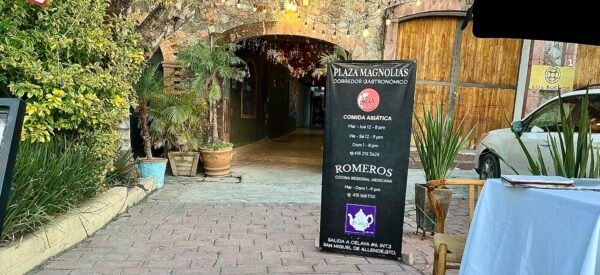
There were six of us meeting up at Plaza Magnolias on Salida a Celaya. The restaurant is at the back and, after a brief walk through the tunnel, you emerge into one of the town’s prettiest courtyards.
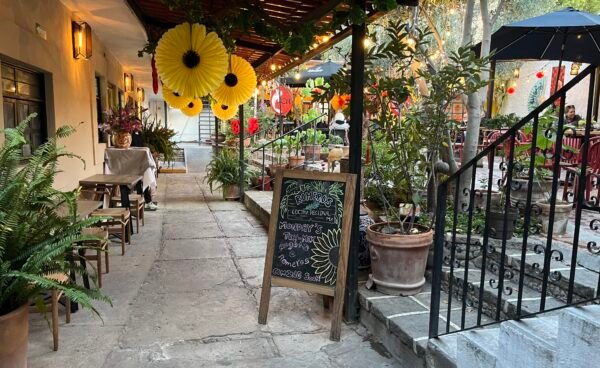
One of my favorite chef/owners, Franco Davalos, moved his restaurant, Asia Orient Express, into the plaza a couple of years ago. Though he spent a lot of years waiting tables in the U.S., owning and operating a restaurant is a fairly new adventure for him. So far, it’s been good. So good that he’s now expanding. The area around the classic fountain has been split into two separate areas and a second kitchen built on the side.
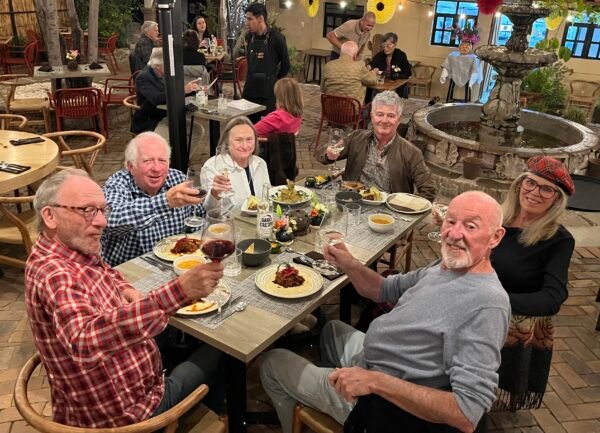
The new place is called Romeros Cocina Regional MX and it is a celebration of some…or perhaps make that most…of Mexico’s extraordinary contributions to the world of cuisine. And, as mentioned, on their menu is that Mole Manchamanteles. Of course I ordered it.
It wasn’t just the mole that made my decision so easy. Like human relationships, a sauce is only as good as its companion and the restaurant was pairing their mole with what I consider to be one of the most magnificent of all stewing meats, beef short ribs.
But what to start with? I decided to keep it reasonably light. I decided I’d have a soup.
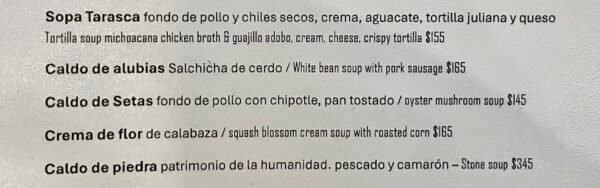
Chef Franco doesn’t make it easy. There are eleven different options on the entrados/caldos portion of the menu. Five of them are soups. Five of the six of us chose to order a soup.

Don Day’s Wife went for the white bean with sausage so I knew I’d get a good sample of that.
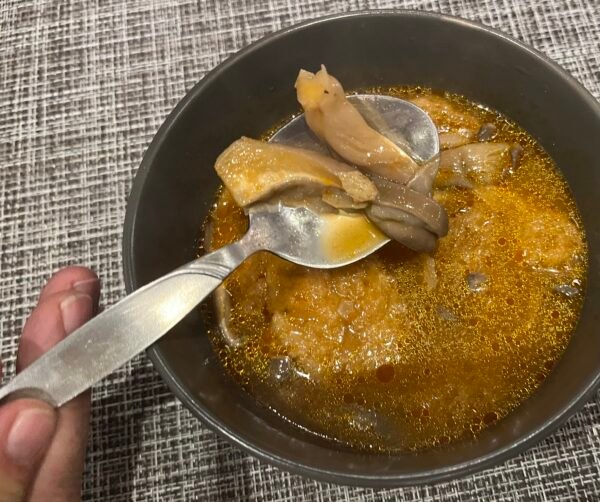
My friend Dick ordered the oyster mushroom soup and I was sure he’d share a spoon or two.
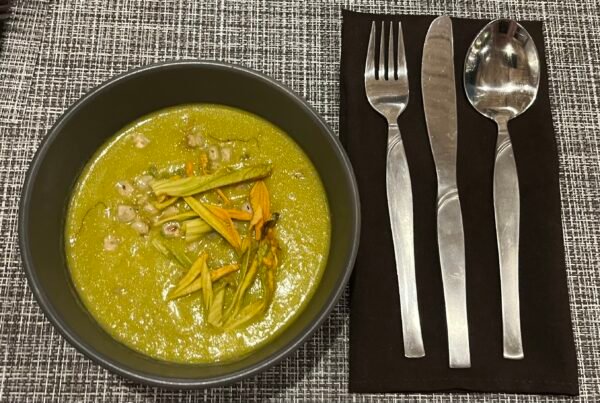
Three of us ordered the squash blossom with roasted corn. Along with beans, squash and corn make up las tres hermanas, the three crops that, in harmony, fed much of Mexico’s population before the arrival of the conquistadores. The creamy broth was an impressive start to our intro to Romero’s traditional Mexican cuisine.
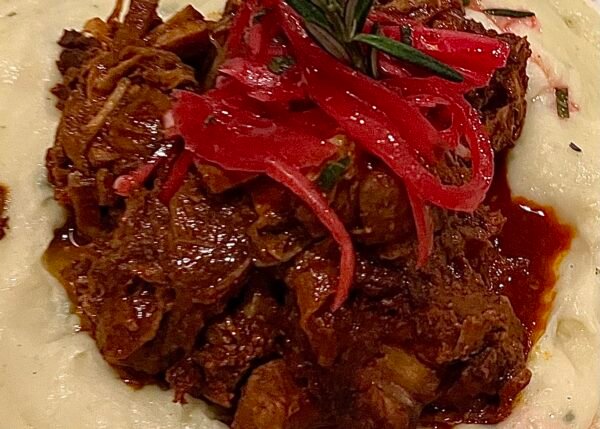
My Mole Manchamanteles arrived and my first take on it was the size. There must have been half a pound of succulent looking meat. It sat in the center of a bed of what looked like mashed potatoes but was actually creamed cauliflower.
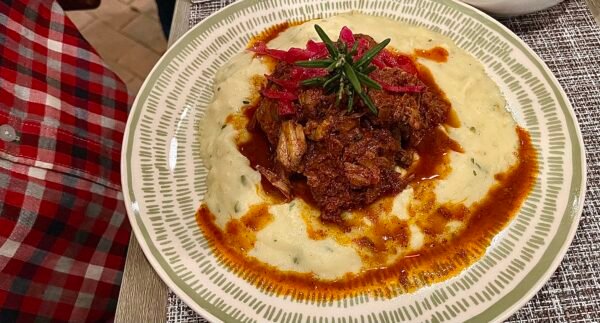
“I do put some potato in to help hold the purée together”, Franco told me.
And there was that reclusive sauce, that mole I’ve spent a couple of decades searching for without hardly ever laying eyes never mind tongue on, except perhaps as a special on Day of the Dead when it’s prepared as an honor to lost loved ones. It’s always a complex recipe, sometimes with as many twenty ingredients, with ancho chiles the only essential. To me a good manchamanteles is one that confuses your choice of adjectives to describe it. Fruity, tart, nutty, savory, sweet, smoky and spicy might all work. A very good manchamanteles balances those taste emotions. Romeros serves a very good manchamanteles.
Unless you’re in Oaxaca, where restaurants are sometimes themed around their multiplicity of moles, it’s rare to see more than a couple on a menu. Romeros has four, the other three being Mole de Pipian, a Mole Chichilo, and a Mole d’Olla.
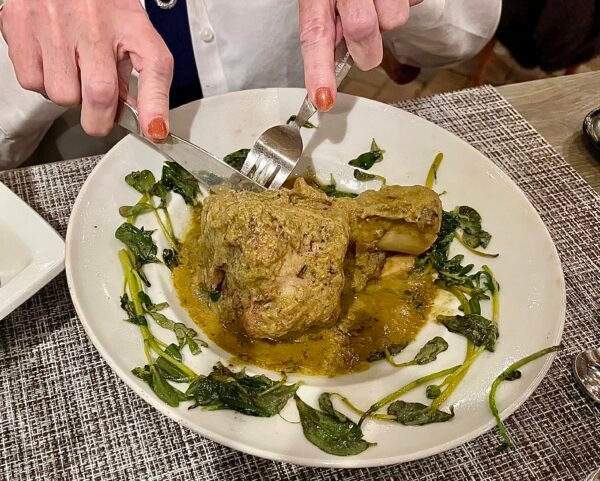
My friend Bev shared some of her Chamorro de Cerdo which came bathed in the pipian. I congratulated the chef on choosing pork shank, another of the world’s tastiest and tenderest meat cuts to match with the mole and the visual delight of the ring of purslane, perhaps Mexico’s most under-appreciated native green.
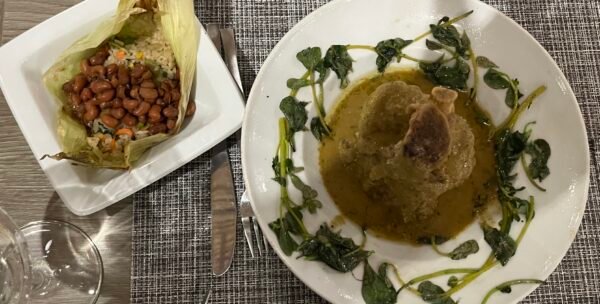
It’s tough to place veggies on a plate or in a bowl without them competing with the sauce. Plaudits again to the chef for serving his beans as a side.
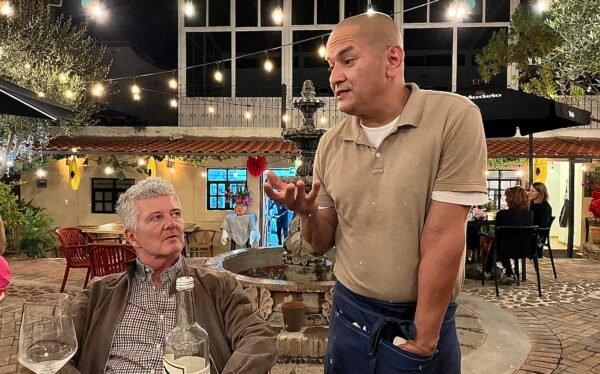
As we struggled to find empty stomach space for some wonderful looking and tasting desserts, Franco Davalos came over to chat about his Mexican/American past (he left Michoacán for the United States when he was fourteen) and the restaurant’s future.
Though I mumble and fumble when I try to explain why, new restaurants featuring Mexican cuisine that don’t “internationalize” their menu have struggled to succeed in this town. Some of those that were here when I arrived, 20+ plus years ago, have survived…places like El Correjo, La Posadita, El Alborado, Los Milagros and El Manantial…and most seem to continue to thrive. Newbies that featured Comida Mexicana, however, have mostly come and gone. I was very fond of Tito’s, the Mexican restaurant that preceded Romeros in Plaza Magnolias, but its life could be counted in months.
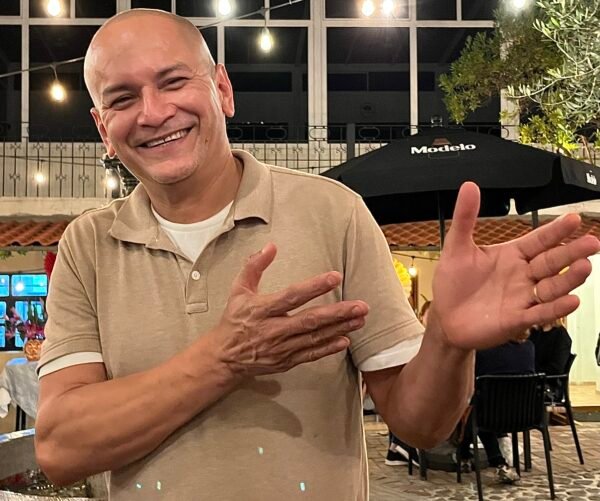
So does Franco Davalos have what it takes to reverse that trend? Will Romeros be one of the seldom survivors?
I think so. But it won’t be without its challenges.
Romeros will always have the problem of tourists not straying far from Centro. Plus its courtyard location also makes it impossible to have any persuasive street presence. The geographic division between Asia Orient Express and Romeros is a little too much dotted-line but I appreciate it’s difficult to create the separation without some serious expense. And I feel there’s currently a bit too much on the menu and some of it a little too foreign for expat palates, but I expect it to shrink somewhat after Franco Davalos has had a few weeks to measure the demand for each offering.
And why do I think that Romeros will buck the trend and still be around when I’m still searching for the seventh mole in the afterworld? It’s those same two words again. Franco Davalos.
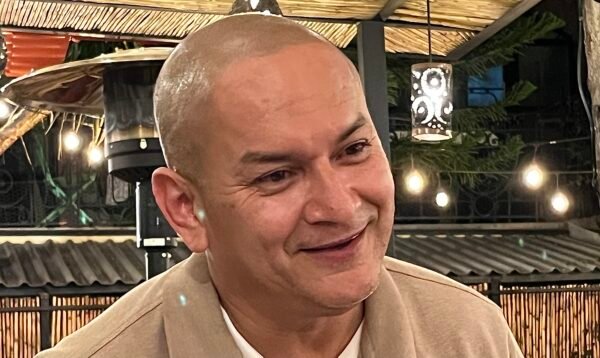
Franco has already proven to me to be a good chef, a good people manager, a good listener, a good front-of-house, a good promoter, a very hard worker and a very modest human being. I’m heartily hoping that may be enough to bring him success with a restaurant showcasing traditional Mexican cuisine in this town.
Romeros Cocina Regional MX is located at the rear of Salida a Celaya #6 in San Miguel de Allende, Mexico. The restaurant is open Sunday, Monday, Wednesday and Thursday from 1:00 to 8:00 pm; Friday and Saturday from 1:00 to 9:00 pm.
Can’t wait to try it. We’re back in 2 weeks!
how td subscribe to your blog?
You’re now subscribed.
Franco is great! I love his passion for what he does. We’ve been going to Asian Express since moving to San Miguel 2 1/2 years ago. And we were at Romano’s opening night, and we will definitely go back! So happy he has these 2 amazing restaurants. Congrats Franco!
Great review. We discovered Romero’s before their official opening and have dined there twice already. I highly recommend the Tarascan Soup and Fish with the oxymoron jumbo shrimp on top. We have to try the molé next!!
I love Romeros and Franco! I find the food deeply satisfying and the place itself peaceful.
I keep going back and recommending it to friends. I expect he will do very well!! Thanks Franco for your creativity and zest for good food!
I have always enjoyed the puerco in manchemantel at Pegaso, but eagerly look forward to trying the mole at Romero.
They come and go from that location. Hope that one stays. Nice find.
we will eagerly go there and take our guests
… I will find my way there to enjoy Franco’s new creation. His Asian Orient Express clearly displays his talent in the restaurant arts … and I agree with your mention of having a wider perspective on international cuisine… I can’t think of a better option for this new restaurant, if Franco chooses to go broader, than to add some real Tex Mex to the menu … it would be a huge success! IMHO …